
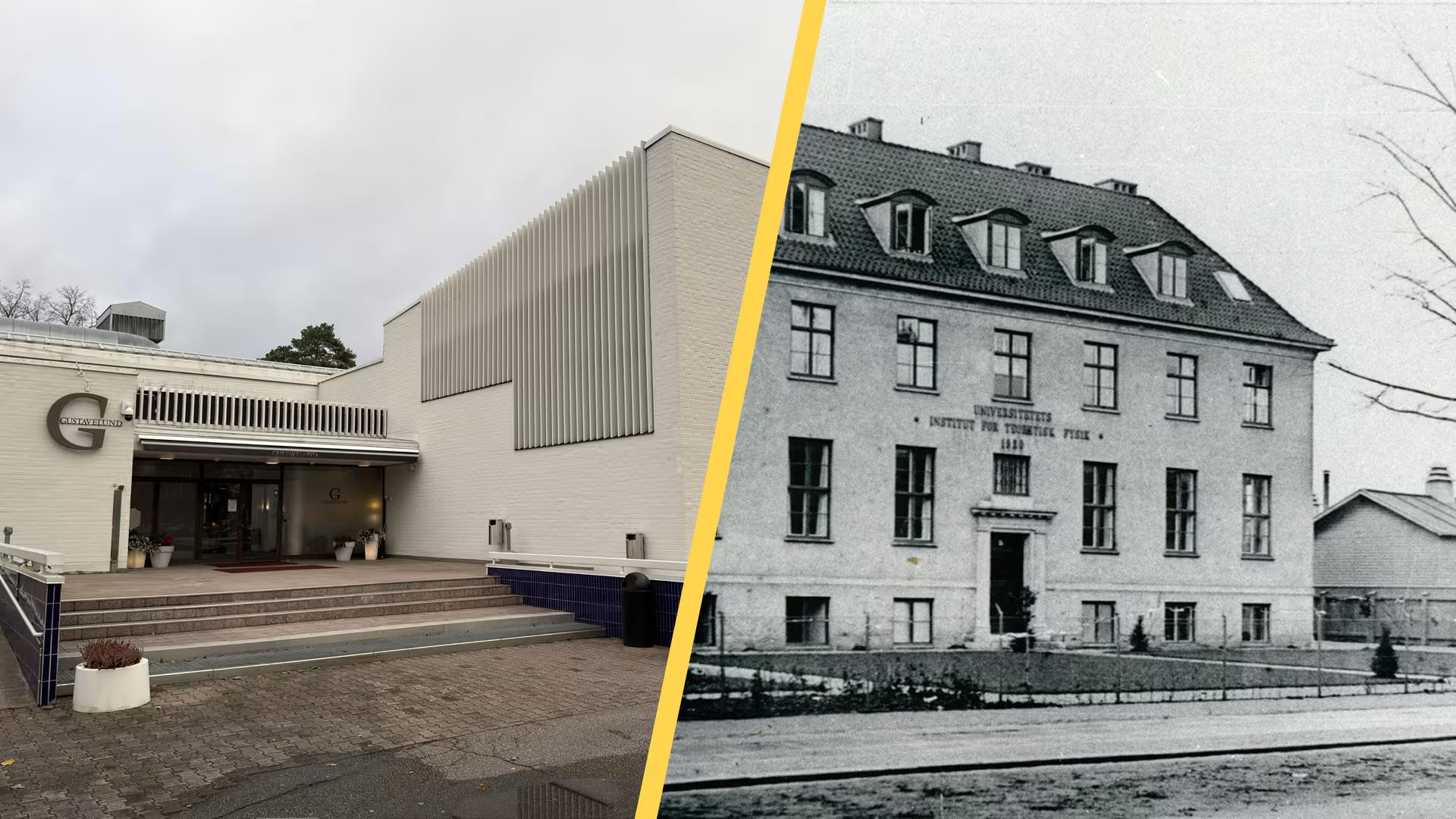
The first major meeting of the Scientific Advisory Board of the Finnish Centre of Excellence in Quantum Materials (QMAT) was held in early November at Gustavelund, a charming 1960s conference centre in Tuusula.
Around a hundred of QMAT’s researchers had arrived, along with the scientific advisers and observers from abroad. They included, among others, Jie Shan (Cornell and the Max Planck Institute), Felix von Oppen (Freie Universität Berlin) and José Ignacio Pascual (CIC nanoGUNE) and Mikael Fogelström (Nordita).
For me, in my role as QMAT’s communications officer, the occasion was an excellent opportunity not only to meet people but also to learn more about quantum materials. Although I am familiar with physics, subjects such as moiré materials, skyrmions and topological insulators are new and interesting acquaintances.
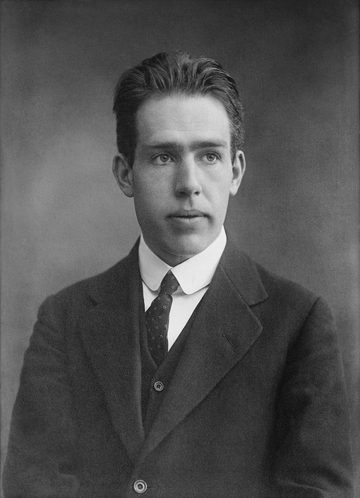
As I followed the talks, I was reminded of Niels Bohr and his remark that quantum physics cannot be understood without first being shocked by it. The same applies to quantum materials.
Bohr also came up at dinner, when Nordita’s present director, Mikael Fogelström, was sitting beside me. In the early 2000s I was often in Copenhagen on reporting assignments, and one of my destinations was frequently the joint Nordic institute for theoretical physics, Nordita, which was then based there. Many Finnish researchers were visitors there too.
Nordita was founded in Copenhagen in 1957 on Niels Bohr’s initiative, and it remained there until 2007, when the funding arrangements were recast and the institute moved to Stockholm. There it is hosted jointly by KTH Royal Institute of Technology and Stockholm University.
In Copenhagen, Nordita was housed alongside the Institute for Theoretical Physics, which Bohr had founded in 1921, in a charming (but impractical) complex of buildings at Blegdamsvej 17.
In the middle building, Bohr’s office and the adjoining rooms had been preserved as a museum. They were, of course, almost always on the programme of my visits – the place became something of a pilgrimage site.

In Bohr’s office, his desk and blackboard had been restored, the latter bearing equations that had been wiped away and rewritten.
I could easily picture Bohr walking back and forth, thinking aloud. According to those who heard him, his speech was often slow, and he would search for words. Not because he could not have spoken more quickly, but because, in his view, precise thinking requires precise language.
In the 1920s Bohr was famous, and young physicists arrived to join him from every corner of Europe, many of them barely in their twenties. For them this was the start-up of its day – the place where things were happening. The centre of a new world.
The QMAT meeting, too, brought together people from around the world, most of them young, postdocs and doctoral researchers. Perhaps one day one of them will also turn the world upside down, for instance by discovering how superconductivity can occur at room temperature.
What is quantum physics about?
The reason I am recalling Copenhagen is quantum mechanics. Its story began in 1900, when the German Max Planck tried to explain how a hot body radiates light. When metal is heated in a forge, for example, it begins to glow red.
That reddish light is only part of the electromagnetic radiation it emits. Most of the radiation is in fact thermal radiation, infrared radiation, which the eye cannot see.
Likewise, a piece of ice lifted from the surface of a pond on a cold winter’s day emits electromagnetic radiation. Not as much, and not at the same wavelengths as red-hot metal, but it does so all the same.
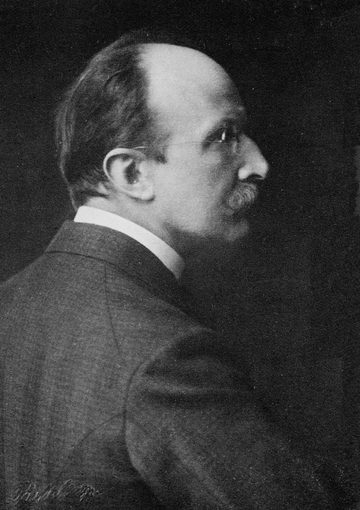
Planck pondered how this electromagnetic radiation leaving a body, and the energy it contains, could be measured and calculated. In the end Planck was forced to assume that energy can be transferred only in packets of a certain size, that is, in quanta.
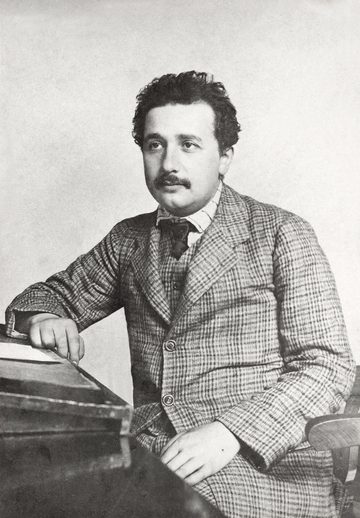
Planck regarded the assumption as a computational device, but another contemporary, German-born and living in Switzerland, Albert Einstein, took the matter seriously and proposed in 1905 that light itself consists of packets of energy, which we now call photons.
Isaac Newton’s beautiful world of classical physics had acquired a crack.
Electrons, fall in!
The second act of the story took place in 1913. Ernest Rutherford’s experiments showed that the atom has a small positive nucleus orbited by electrons. According to classical physics, however, an orbiting electron ought to radiate away its energy and plunge into the nucleus in a fraction of a second. That, however, does not happen.
Bohr explained that electrons can occupy only certain allowed orbits. And when an electron jumps from one orbit to another, the atom emits or absorbs exactly one quantum of light. No one yet knew why nature should work this way, but the trick worked well. Bohr’s model explained, for example, the spectral lines of hydrogen with astonishing accuracy.
The German Werner Heisenberg worked at Bohr’s institute on two occasions and, in 1925, sketched out matrix mechanics, in which the image of orbiting trajectories was abandoned and one spoke only of measurable quantities.
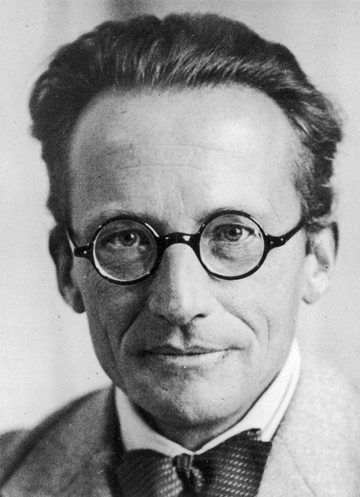
The following year Erwin Schrödinger presented his wave equation, in which the electron is described by a wave function.
When Schrödinger visited Copenhagen in the autumn of 1926, he and Bohr clashed. Two very different men, and two very different theories, met. The theories, however, turned out that same year to be two mathematical formulations of the same thing.
In 1927 Heisenberg published what is known as his uncertainty principle. According to it, the position and momentum of an elementary particle cannot be known simultaneously with arbitrary precision.
Bohr raised the stakes with the principle of complementarity, according to which some physical properties are complementary to one another. They cannot be observed or measured perfectly at the same time, yet together they nevertheless provide a comprehensive description of a quantum system.
In the same way that a particle’s position and momentum cannot be determined simultaneously, light too can appear either as electromagnetic radiation in wave form or as a particle, a quantum of light.
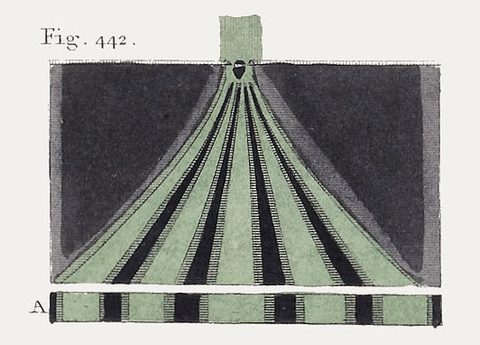
This is known as wave–particle duality. And accordingly, electrons, for example, can also behave both as waves and as particles, depending on how they are measured or in what kind of experiment they are examined.
In order to understand the world of particles, one has to look at things from two angles.
From these ideas emerged the so-called Copenhagen interpretation, which brought into physics an uncomfortable principle of indeterminacy. With the help of the so-called wave function one can describe the state a system (such as an atom) is in, and instead of exact results we can only know the probabilities of different measurement outcomes.
When we measure the state of a system (such as an atom), the system is, before the measurement, in a superposition, in many states at once, but during the measurement the wave function locks into one of the possible outcomes.
Chance, indeterminacy, is always involved. We cannot know particle phenomena with precision; reality is always behind a veil.
”God does not play dice”
The Belgian chemist Ernest Solvay developed with his brother, in the late nineteenth century, a new way of producing soda industrially. He grew very rich from his industrial activities and, as an enthusiastic amateur of science, in 1911 had the idea of inviting all the leading physicists of the day to Brussels to discuss among themselves. The idea worked, and more than 20 meetings were subsequently held with Solvay’s financial backing.
The fifth of the meetings, in 1927, proved significant for quantum mechanics. All the leading names in the field were there: Bohr, Einstein, Heisenberg and Schrödinger, as well as Paul Dirac, Max Born, Louis de Broglie, Wolfgang Pauli, Max Planck, Arthur Compton, Paul Ehrenfest, Marie Curie and many others.
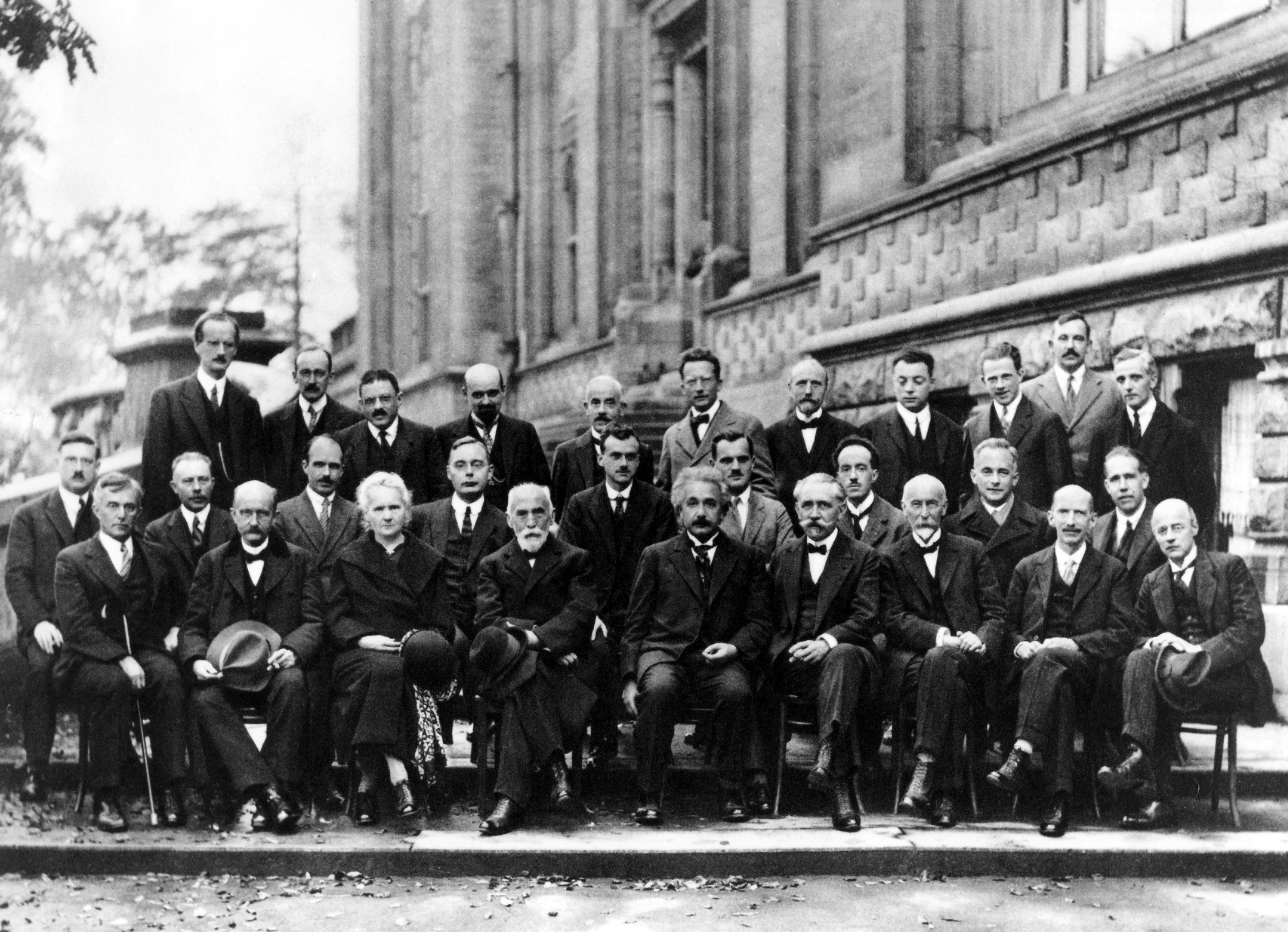
Bohr and Einstein in particular clashed spiritedly at the meeting, for Einstein had no liking at all for the indeterminacy of quantum mechanics. "God does not play dice," Einstein said once again, and tried to find logical contradictions in quantum mechanics.
Bohr succeeded in defeating Einstein’s various thought experiments mathematically, and the so-called Copenhagen interpretation of quantum mechanics gained ever more ground. According to it, probability and superposition are fundamental properties of nature. It is not, then, a matter of shortcomings in our understanding, but a property of nature.
And the connection to quantum materials is...
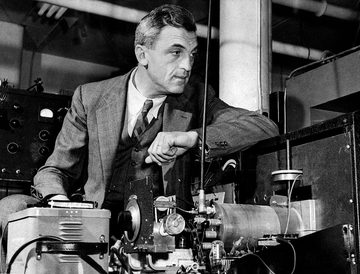
In 1928 Felix Bloch, a student of Heisenberg’s, had the idea of applying quantum mechanics not to individual particles but to electrons in a crystal. The result was band theory, which explains why one substance conducts electricity and another does not. From it came semiconductors, the transistor and the whole of modern electronics.
In 1957 John Bardeen, Leon Cooper and Robert Schrieffer explained superconductivity, essentially on the basis of that earlier work. According to them, electrons form pairs that move as a single quantum state. Electricity can flow in a superconducting wire just like that, with no resistance at all.
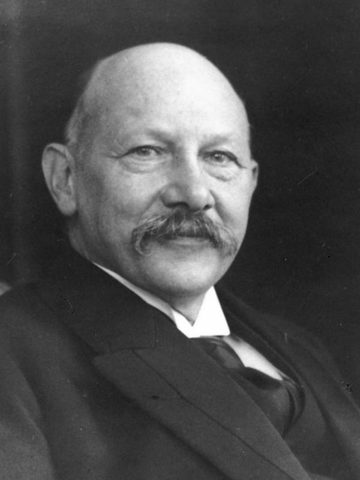
The Dutch Kamerlingh Onnes had already discovered superconductivity in 1911, but did not live long enough to see the phenomenon explained. He died without knowing that superconductivity would ultimately be only one of many low-temperature phenomena that require a quantum-theoretical explanation.
Superconductivity is a macroscopic quantum phenomenon: a vast number of electrons behave collectively. Quantum mechanics was no longer only a theory of particles, but told us what matter is like and how it behaves. That is precisely what quantum materials are about.
The next great step forward was taken in 1980, when Klaus von Klitzing observed a phenomenon in which electrical conductivity comes in steps so precise that it can be used as a basis for units of measurement. Behind the phenomenon lurks topology, a branch of mathematics that studies the enduring properties of shapes.
The most intriguing application of this is the so-called topological insulator. In it, the interior of the material is an insulator, but on its surface electrons travel regardless of disturbances.
Another hot topic is the moiré materials already mentioned at the outset: if, for example, two graphene layers, carbon films just a single atomic layer thick, are twisted relative to one another by about one degree to the so-called magic angle, the structure can become a superconductor!
So far topological insulators and moiré materials have no applications; the work is basic research. But it is already known that quantum computers and quantum technology, for example, could benefit from them greatly, since more stable qubits could be made with the help of topological states.
They can also be used to tune the properties of electrons conveniently, which could make it possible to build, among other things, extremely sensitive sensors and transistors that consume very little energy, as well as other electronic components.
The talks at QMAT’s November gathering offered a fine glimpse of how the story that began in Copenhagen continues to this day. Transformative practical applications glimmer in the mind’s eye, but they cannot be reached without basic research.
From next week we will begin publishing, on QMAT’s communications channels, glimpses of this research and of quantum materials in more detail. I hope this little Copenhagen story will serve as a good introduction.
Welcome to the fascinating world of quantum materials!
Photos from the meeting
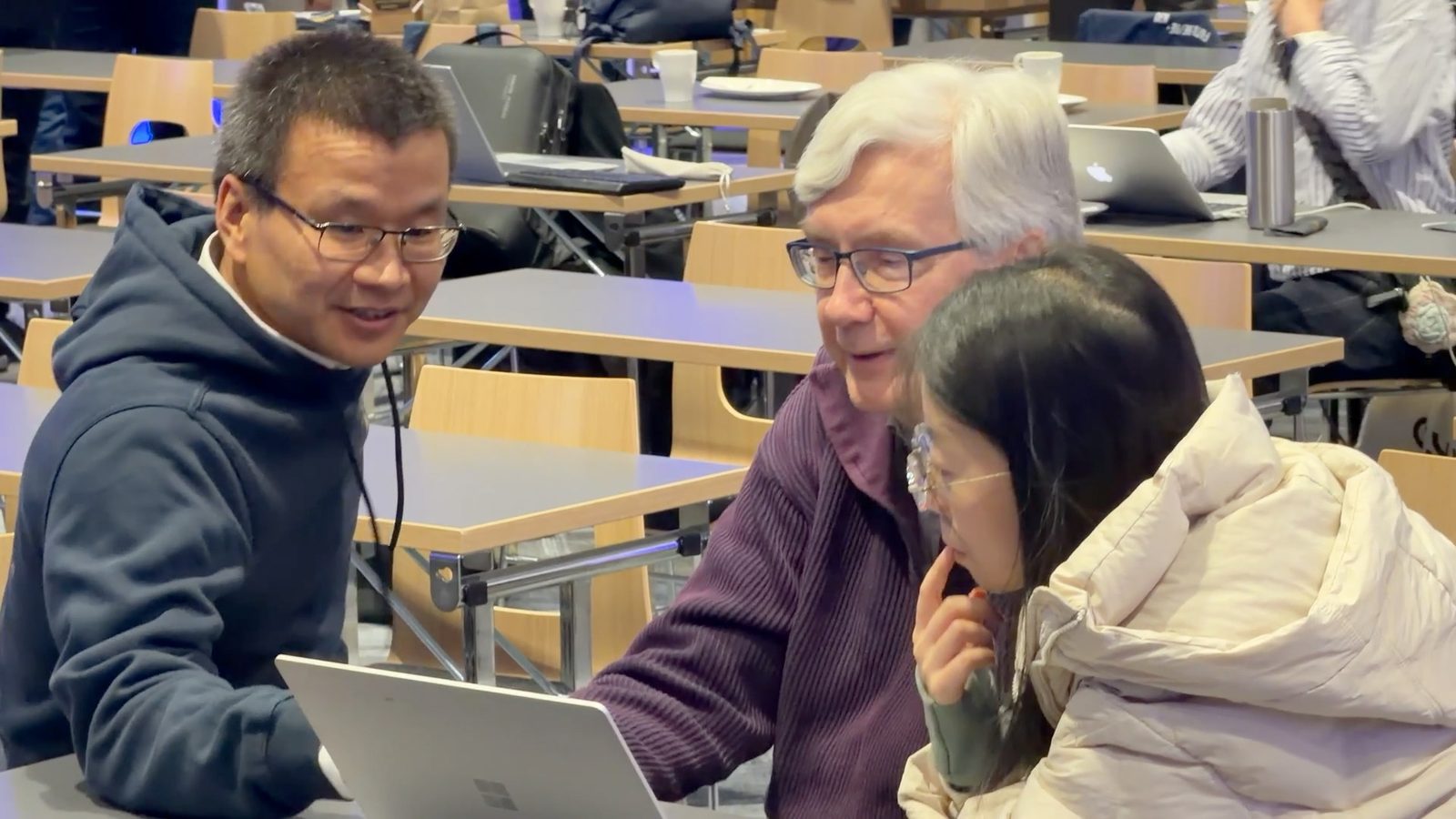
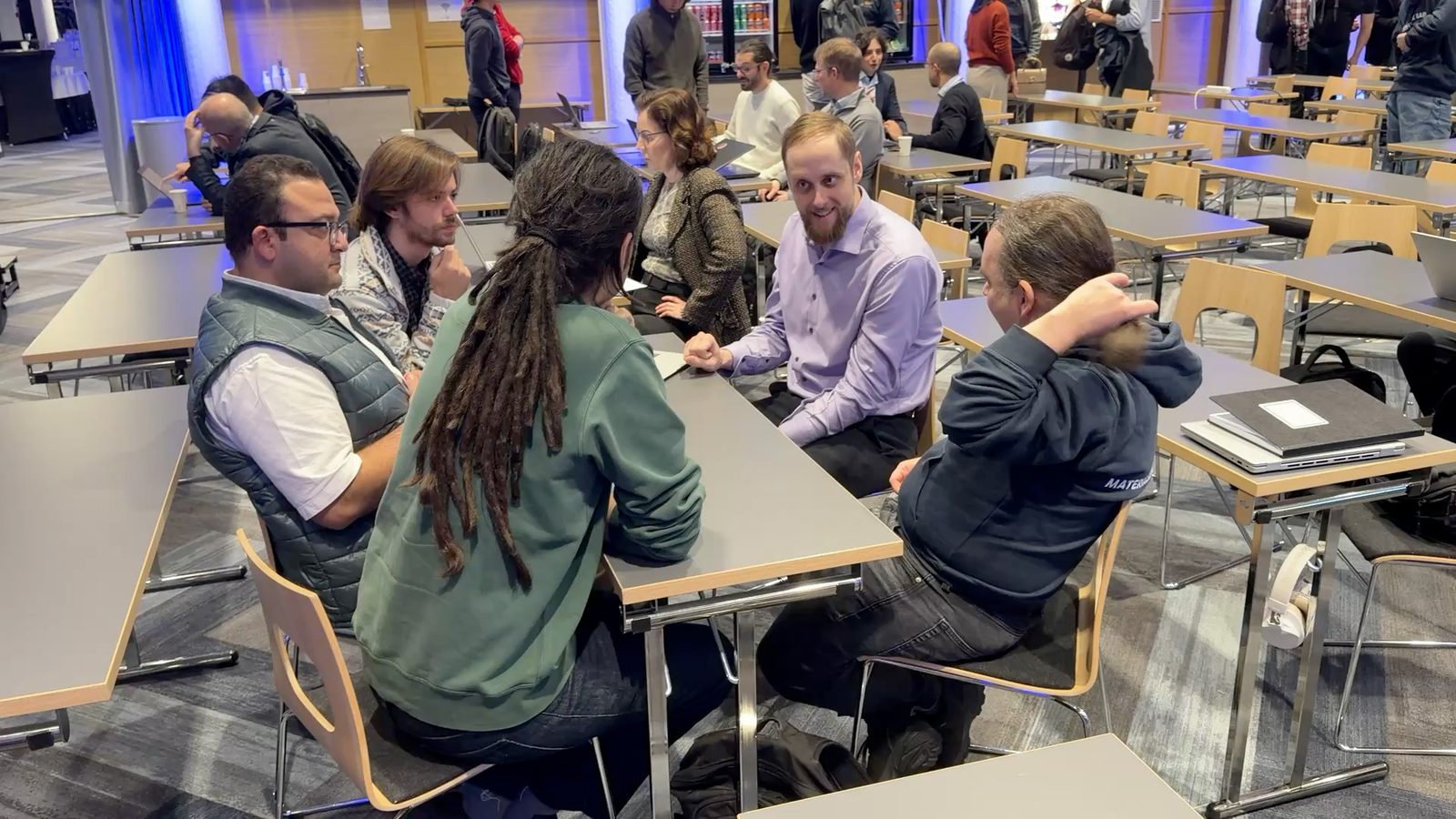
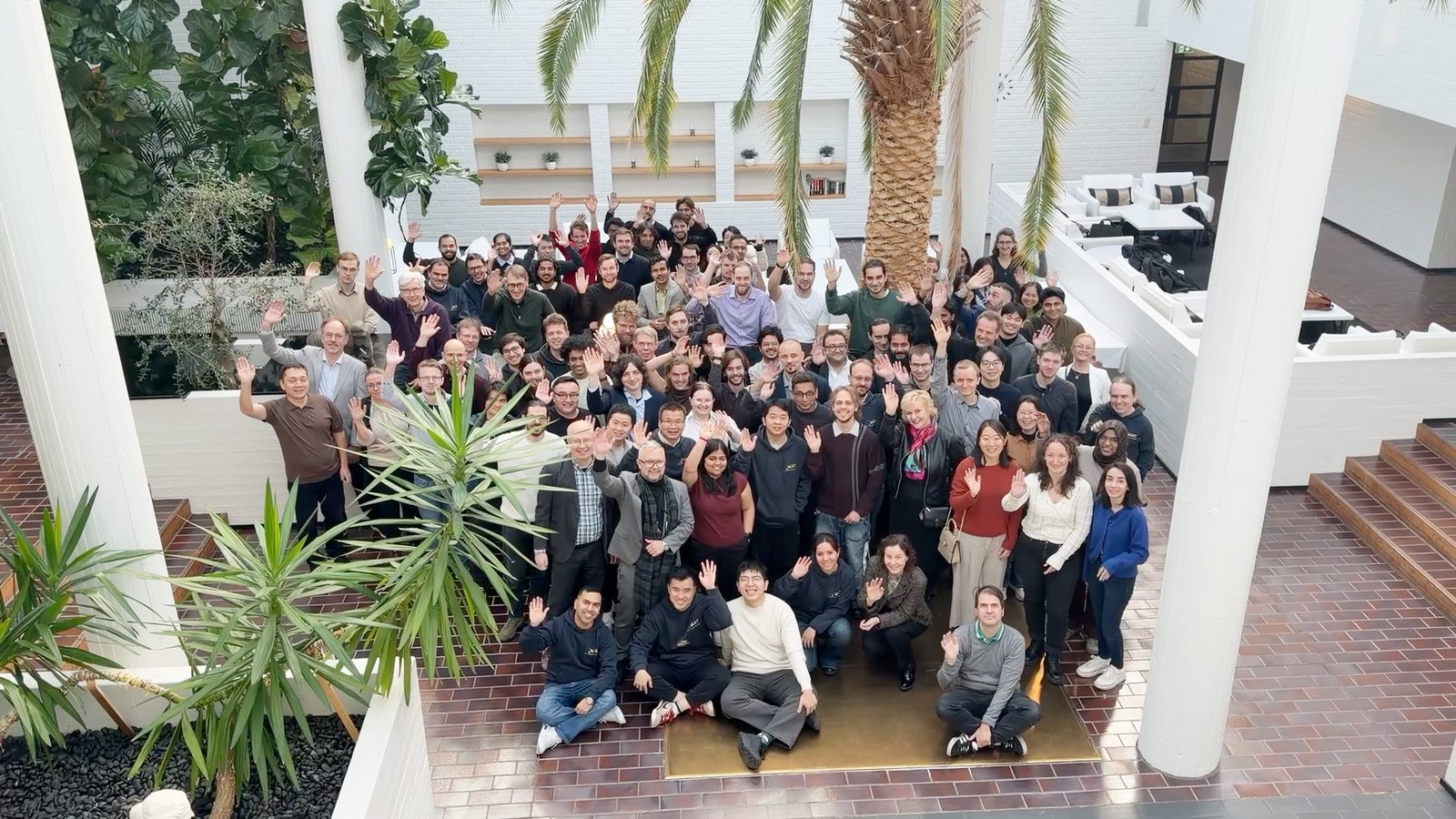
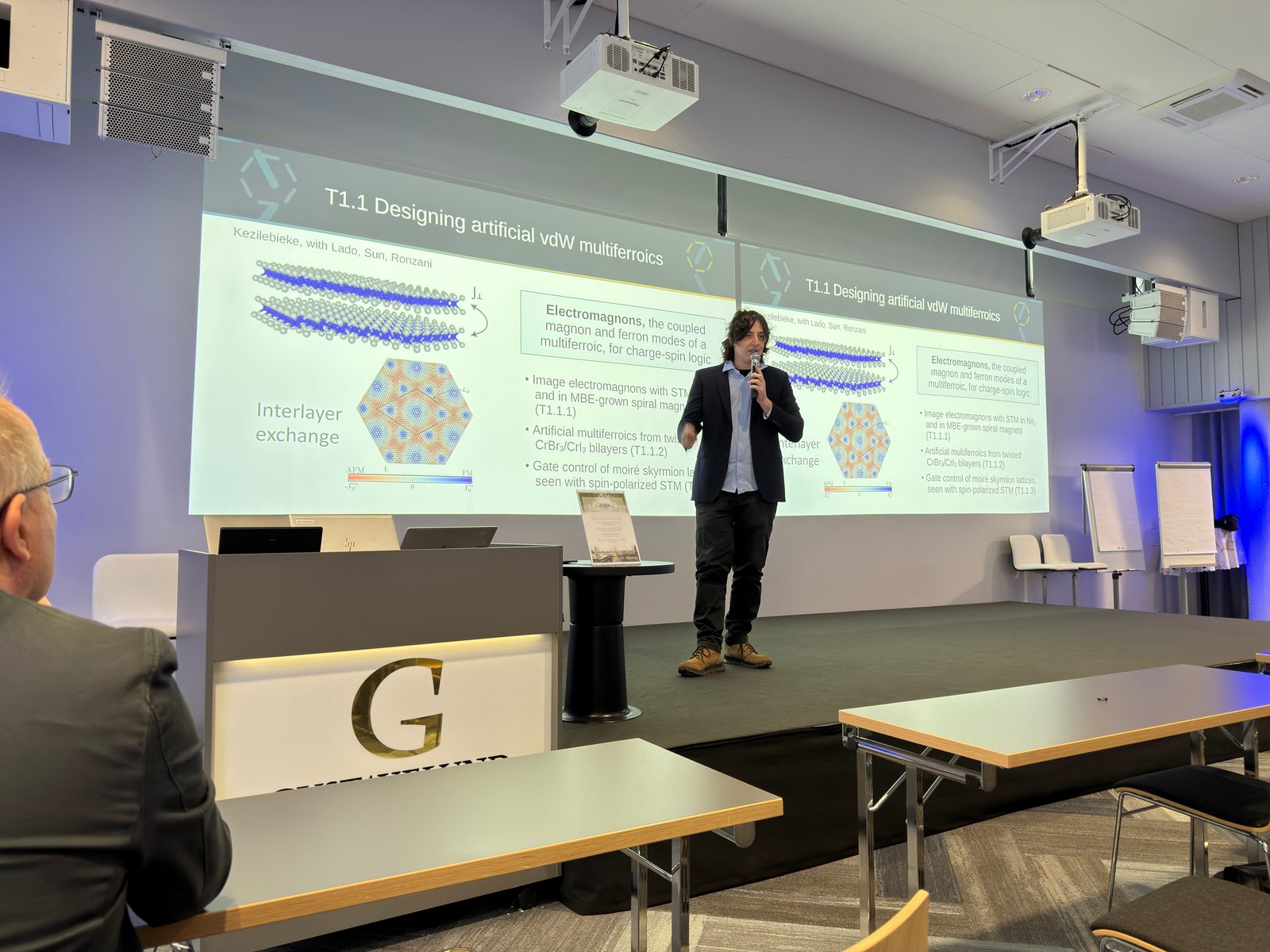
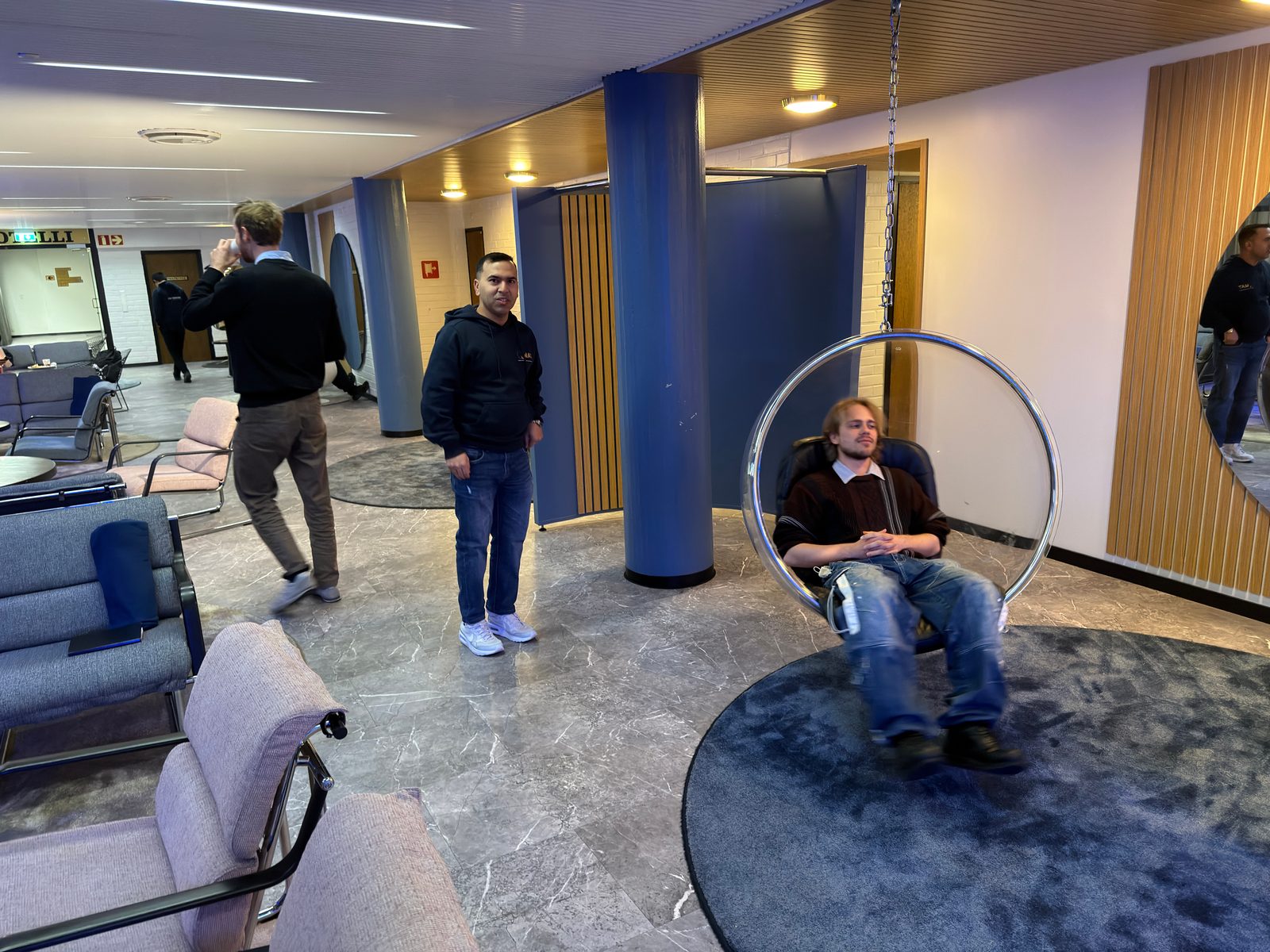
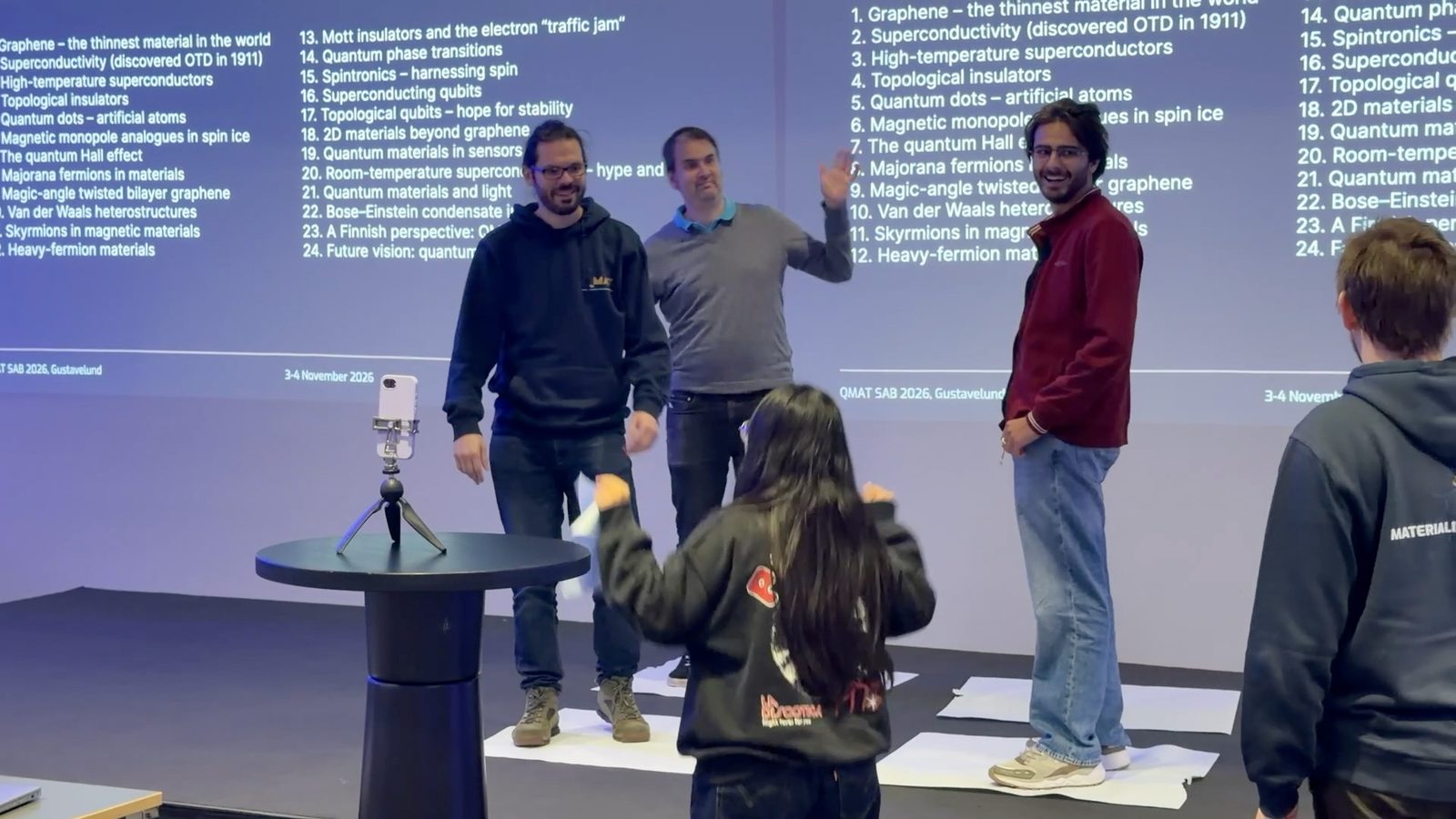
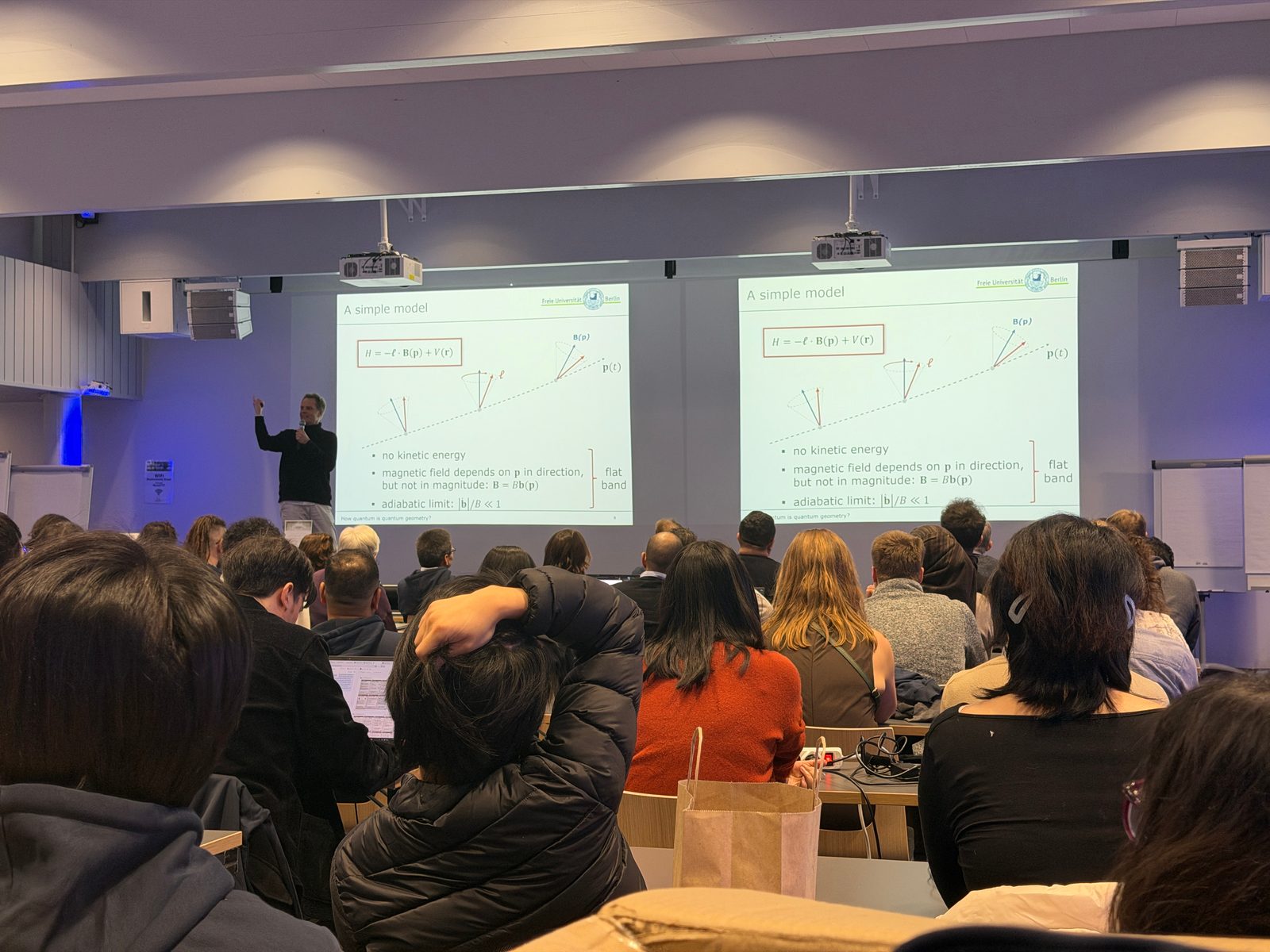
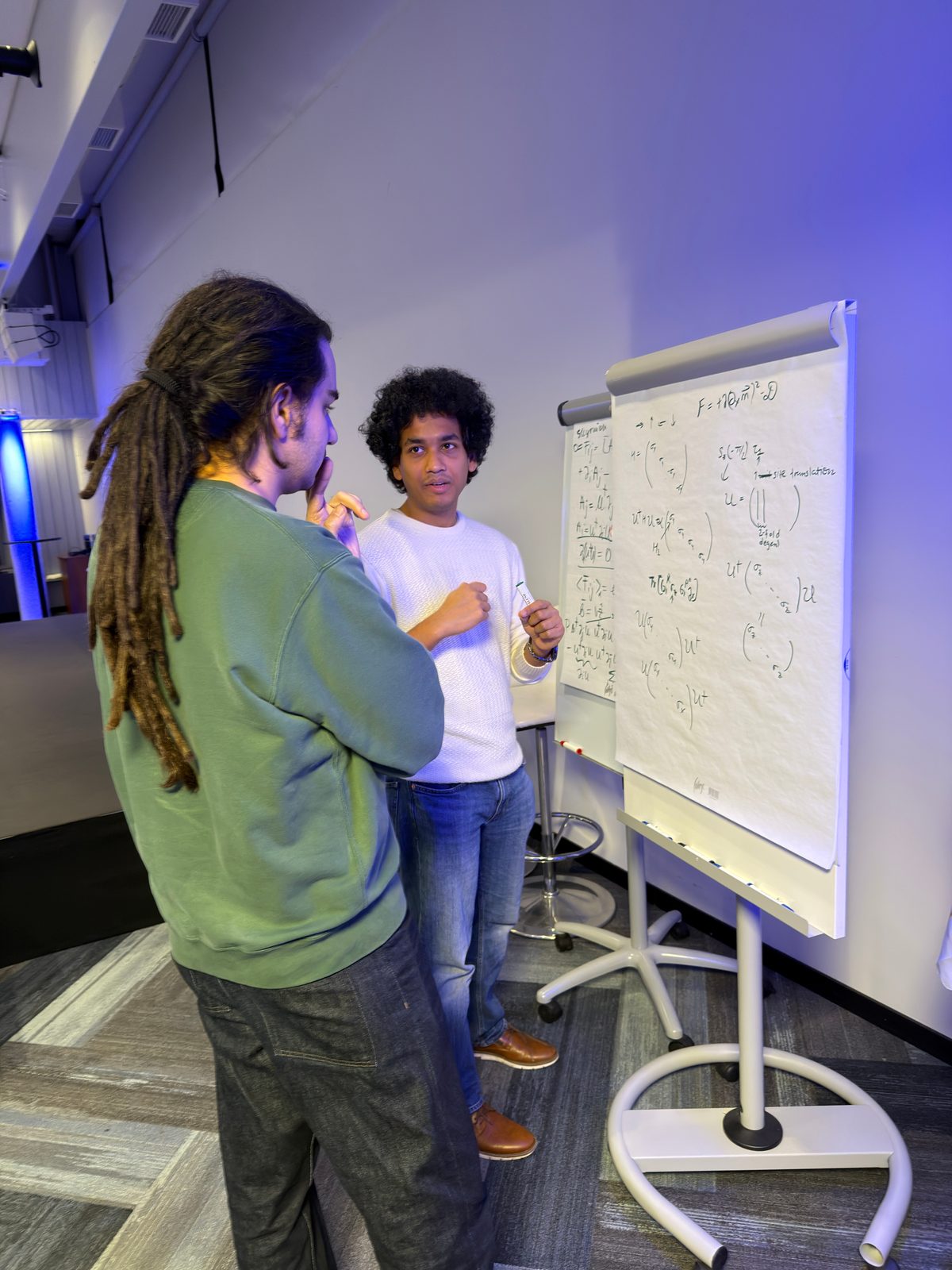
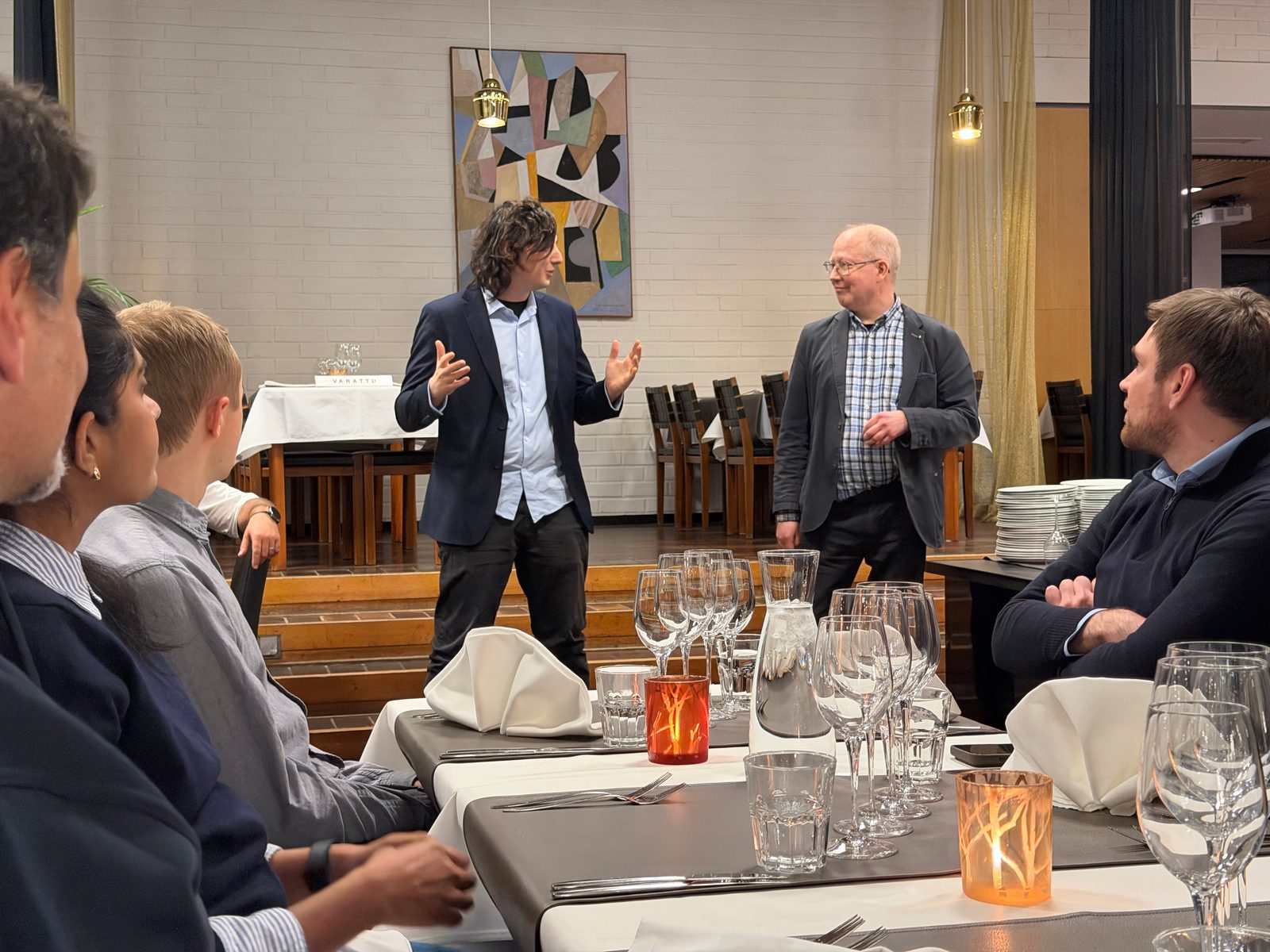
Photos: QMAT. Click a photograph to see it larger.